Daphne Diary, Part One: The Woman Becoming a Tree
The block started as just a white marble rock on a stand under a tent in Sylacauga, Alabama that I had picked out based on nothing other than I liked the shape. When the block was set on the carving table, I marked out a face where I thought the rock wanted it and started carving. That was the beginning of Daphne.
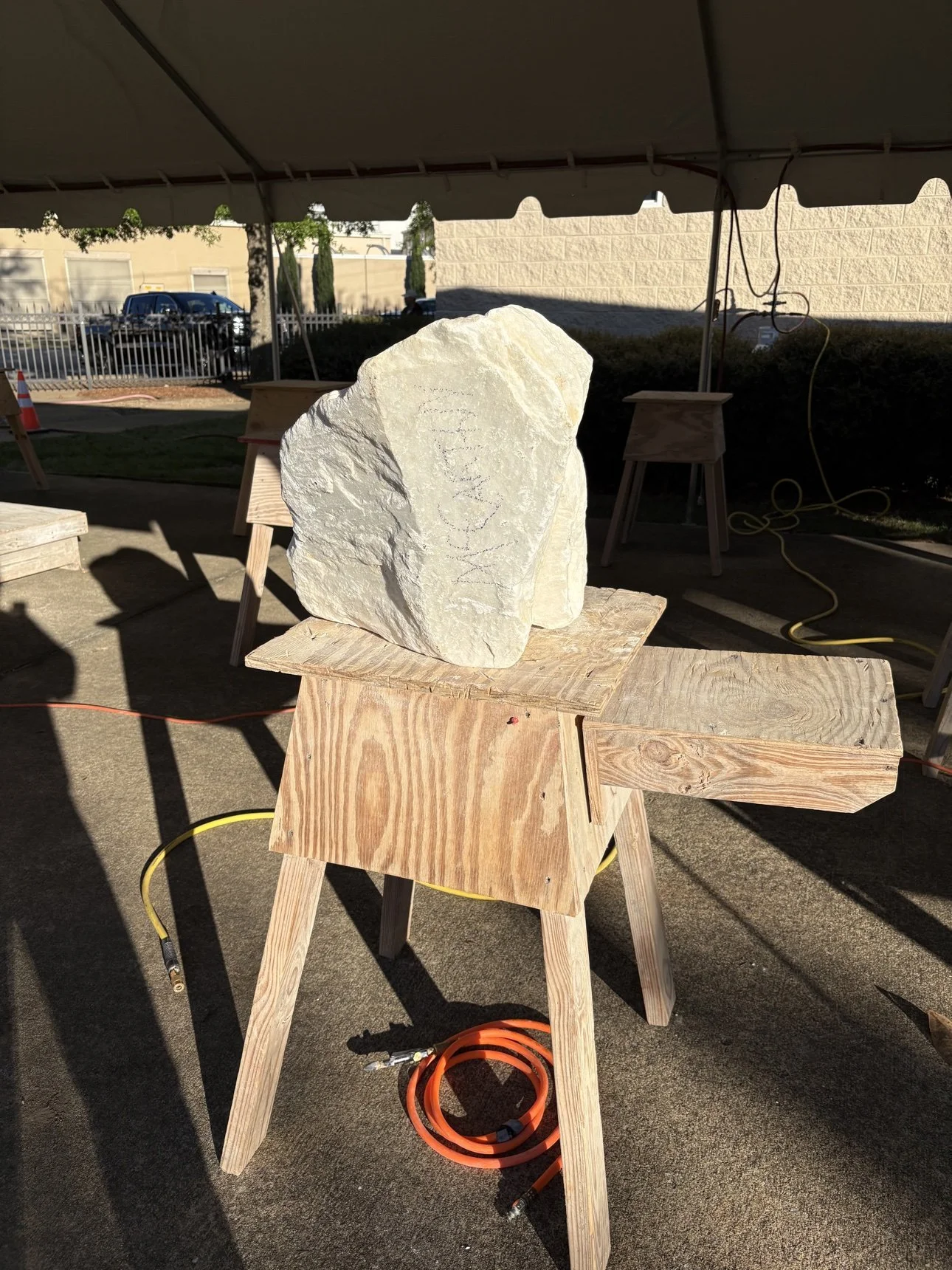
The raw block at Sylacauga, Alabama
She's a woman turning into a tree — the old Greek story. About 18 inches tall, 23 deep, 15 wide. She came home to Louisville with me and she's been sitting on the lift table ever since, each day getting a little less like a rock and a little more like herself.
Right now she's my number one carving priority for a show I have at Kore Gallery here in Louisville in June 2027. Daphne is the piece I'm building the natural side of the show around — my gear-head pieces are the other half of the conversation. It's a really strong piece. The leaves are coming along well, and the concept is really strong.
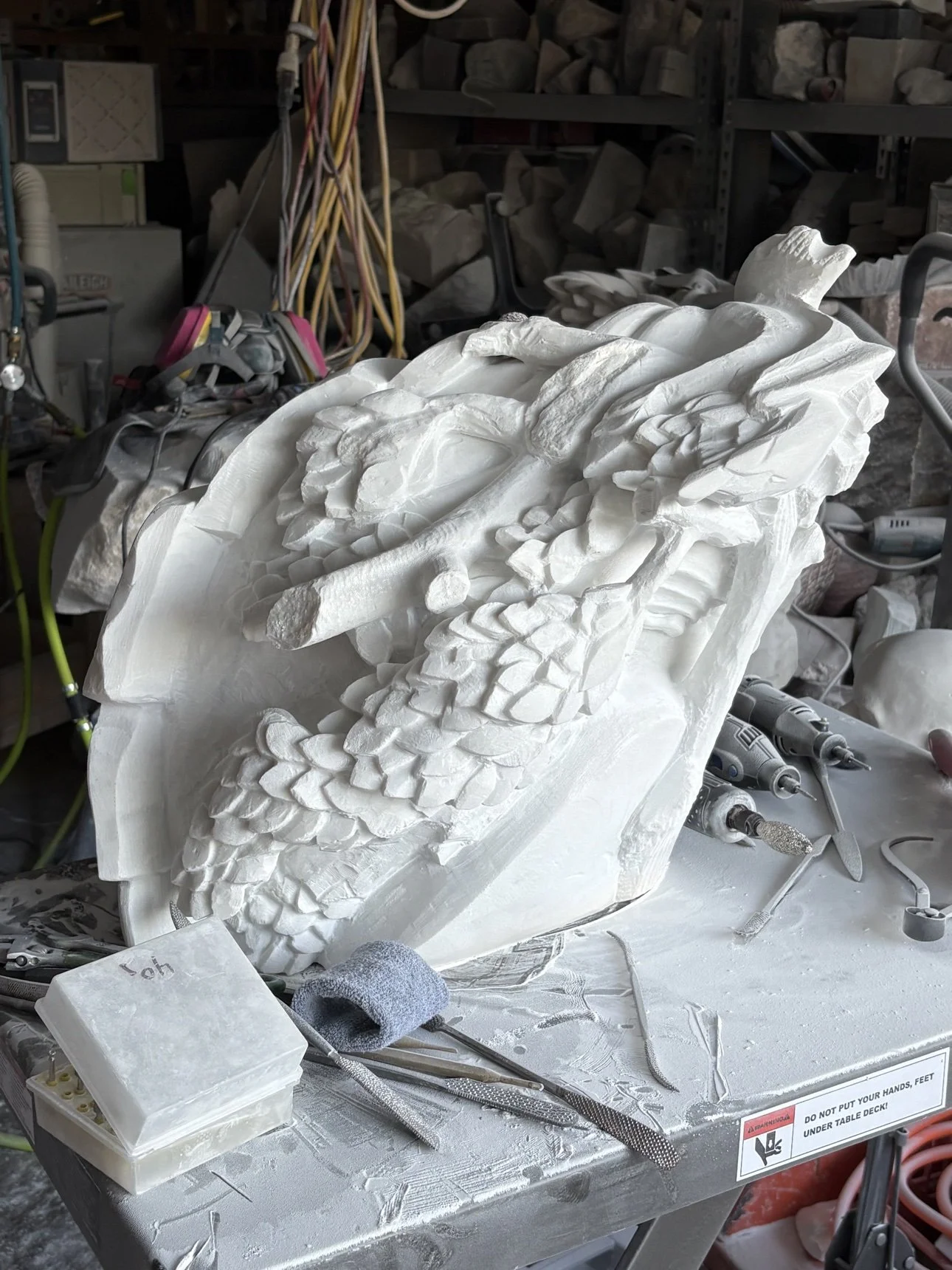
Daphne in the Louisville studio
The past two months or so I've been working the back of her. Along with the leaves and branches, there are five big sweeping arcs back there — what I've been calling the magical sweeps — that cradle the leaves and connect her face to the back side of the work. I'm deepening the channels between the arcs and thinning the leaves out so they read as separate leaves instead of one mass. That's slow work. Leaves in stone only look like leaves when daylight can get behind them, so every leaf that can structurally be undercut will be, to let the light in. There's no shortcut; it's one leaf at a time with rasps and the rotary tool.
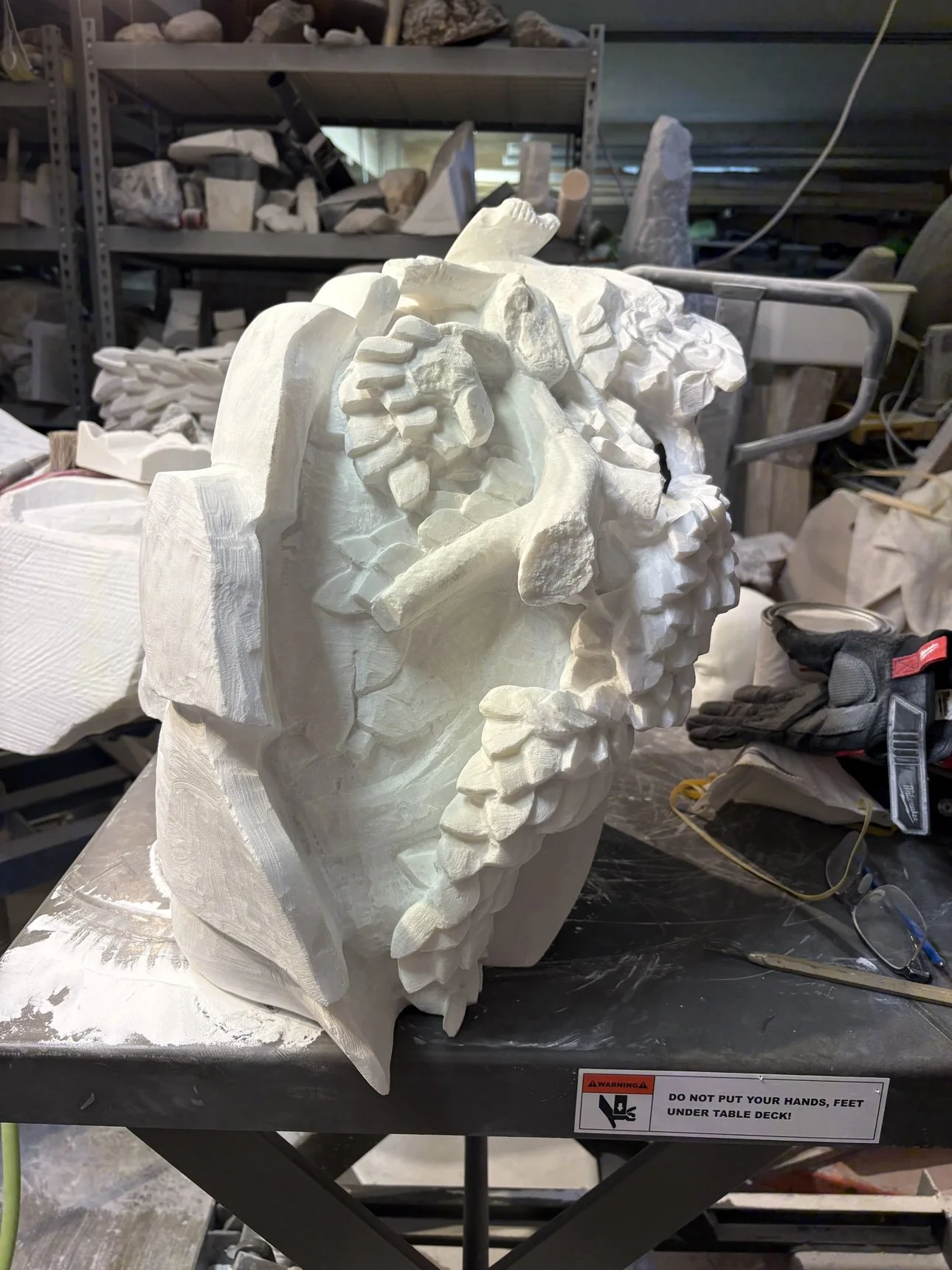
Leaf work on the back
The problem I'm chewing on is the hand at the base. I was undecided about whether to keep it. I keep coming back to the idea that the fingers turn into leaves — the transformation continuing right down through the hand. I spent some time this week looking at Bernini's hand on his Apollo and Daphne, and he does exactly that: solid wrist, fingers lengthening, leaves at the tips. It works because the change is gradual and readable. That's the standard I'm aiming at. I still haven't committed, but that's the direction I'm leaning.
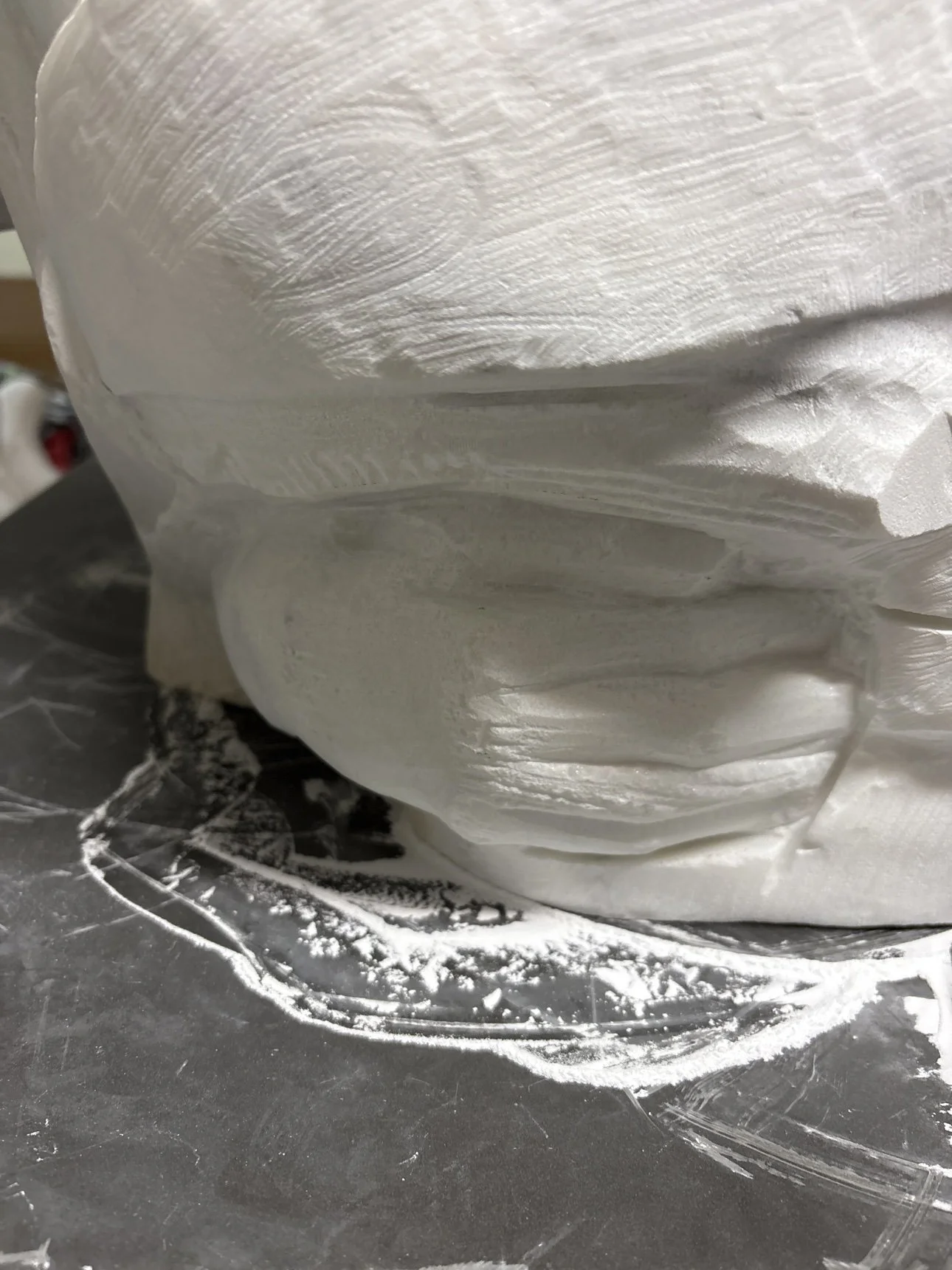
The hand at the base — still unresolved
The plan is simple: finish all the structural carving first — deepen the arc channels, thin and separate the leaves, resolve the hand — and then do the polishing in one pass at the end. No polishing until the carving is done. That's a rule I don't break anymore.
More on Daphne next week.
